Best Filmmaking Course in Shimla with 100% Practical Training & Placement Assistance
Enroll Filmmaking Course at IICEA — learn how films come to life through story development, screenplay writing, cinematography, camera techniques, lighting, sound recording, video editing and hands-on production skills.
Learn through practical shooting exercises, camera handling, lighting setups, audio recording, editing projects, short films and industry-oriented filmmaking training.
Inquire Now
Get Course Details
Filmmaking Course Overview
The Filmmaking Course in Shimla at IICEA Shimla is designed for students, beginners, aspiring filmmakers, content creators, video enthusiasts and working professionals who want to develop practical filmmaking skills.
You will learn film concepts, storytelling, scriptwriting, screenplay development, cinematography, camera operation, composition, lighting, sound recording, production planning and professional video editing.
At IICEA, students receive practical training with 100% job placement support to help them build their filmmaking skills and prepare for career opportunities in the industry.
Skills You'll Gain
Storytelling
Develop compelling stories, concepts and visual narratives for films and videos.
Scriptwriting
Learn scriptwriting, screenplay structure, scenes, dialogue and story development.
Cinematography
Understand camera operation, framing, composition, lenses and visual storytelling.
Lighting
Learn professional lighting techniques, light placement, exposure and mood creation.
Sound Recording
Learn microphone selection, recording techniques, dialogue capture and sound basics.
Video Editing
Learn professional editing, cuts, transitions, audio synchronization and video storytelling.
Film Production
Understand production planning, crew coordination, shooting and project execution.
Short Film Production
Plan and create practical short-film and video projects for your professional portfolio.
Syllabus
- Introduction to Filmmaking
- History of Cinema
- Types of Films
- Film Production Process
- Pre-Production
- Production
- Post-Production
- Roles of a Film Crew
- Story Ideas
- Story Structure
- Characters
- Character Development
- Conflict
- Plot Development
- Visual Storytelling
- Creating Engaging Narratives
- Scriptwriting Fundamentals
- Screenplay Structure
- Scene Development
- Dialogue Writing
- Action Description
- Scene Transitions
- Shot Planning
- Script Breakdown
- Camera Fundamentals
- Camera Types
- Lens Selection
- Focal Length
- Exposure
- Focus
- Framing
- Composition
- Camera Movements
- Practical Camera Exercises
- Introduction to Film Lighting
- Natural Light
- Artificial Lighting
- Three-Point Lighting
- Key Light
- Fill Light
- Back Light
- Lighting for Interviews
- Lighting for Scenes
- Creating Mood with Light
- Introduction to Film Sound
- Microphone Types
- Microphone Placement
- Dialogue Recording
- Ambient Sound
- Sound Effects
- Voice Recording
- Noise Reduction Basics
- Audio Synchronization
- Role of a Director
- Production Planning
- Shot Division
- Shot Lists
- Storyboards
- Location Planning
- Crew Coordination
- Actor Direction
- Shooting Schedule
- On-Set Workflow
- Introduction to Video Editing
- Editing Workflow
- Importing Media
- Timeline Editing
- Cutting & Trimming
- Transitions
- Audio Editing
- Titles & Text
- Basic Colour Correction
- Video Export
- Colour Correction Fundamentals
- White Balance
- Exposure Correction
- Contrast
- Colour Matching
- Creative Colour Grading
- Cinematic Looks
- Colour Workflow
- Documentary Fundamentals
- Research & Planning
- Interview Techniques
- Location Shooting
- B-Roll
- Voice Over
- Digital Video Content
- Social Media Video Production
- Practical Documentary Exercise
- Production Budgeting
- Equipment Planning
- Location Management
- Crew Management
- Production Schedule
- Call Sheets
- Project Documentation
- Client Communication
- Professional Workflow
- Filmmaking Portfolio
- Showreel Development
- Video Portfolio
- Freelancing Fundamentals
- Client Communication
- Project Pricing Basics
- Social Media Portfolio
- Resume Preparation
- Interview Preparation
- Short Film Project
- Documentary Project
- Interview Video Project
- Promotional Video Project
- Camera Shooting Exercise
- Lighting Exercise
- Sound Recording Exercise
- Video Editing Project
- Final Film Portfolio Project
- Industrial Training
Professional Certification
Build your professional filmmaking profile with the Film Making Course in Shimla, featuring practical camera work, storytelling, cinematography, lighting, sound, editing and film production projects.
Earn a Professional Certificate & Stand Out.
GET IN TOUCH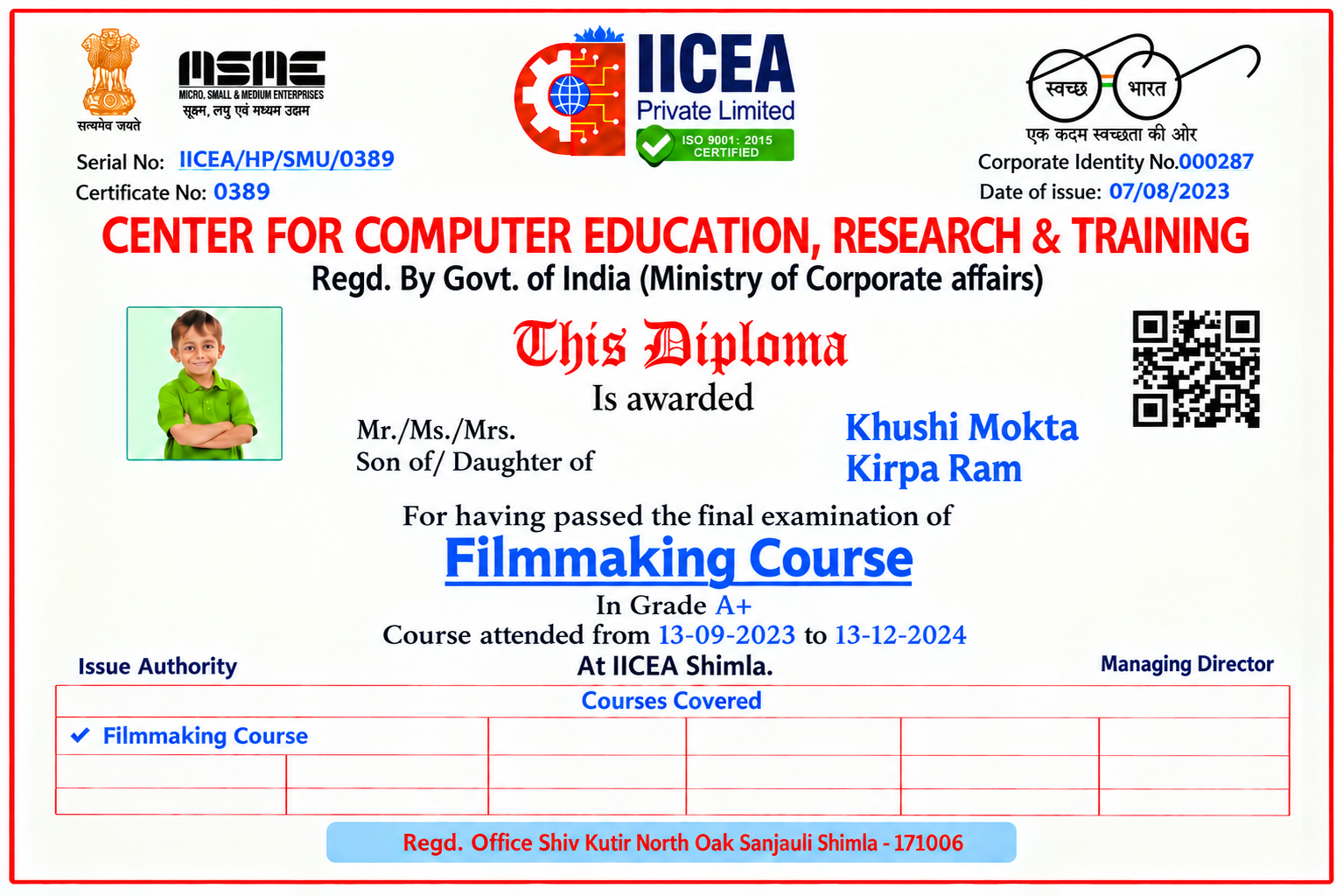
Why Choose Us?
Job-Focused Training
Practical filmmaking training focused on camera work, production, editing and industry-oriented skills.
Practical Film Projects
Work on short films, documentaries, promotional videos and practical production projects.
80% Practical & 20% Theory
Learn through camera exercises, shooting, lighting, sound recording and editing.
Personalized Mentorship
Individual guidance and doubt-solving support throughout the filmmaking training.
Complete Film Production Skills
Learn storytelling, cinematography, lighting, sound, editing and production.
Certification
Get course completion certification after successfully completing the training.
Career Preparation
Build your showreel, portfolio and professional filmmaking skills.
Job Assistance
Get career guidance, interview preparation and placement assistance.
Contact Us
Shiv Kutir, Near Sanjauli Chowk, North Oak, Sanjauli, Shimla, Himachal Pradesh - 171006
Monday to Saturday – 9:00 AM to 7:00 PM
+91 98162 11278
info@iiceshimla.com
FAQs
Yes. The course starts from basic camera concepts, visual framing, and simple storytelling techniques designed for beginners.
Yes. You will learn story ideation, script formatting, dialogue writing, character development, and creating visual storyboards.
You learn manual camera controls like ISO, shutter speed, aperture, frame rates, lens choices, and cinematic camera movements.
Training covers 3-point studio lighting, diffusers, reflectors, color temperature, and balancing natural sunlight on outdoor locations.
Yes. You get practical training on using lapel mics, shotgun microphones, boom poles, audio levels, and capturing clean dialogue.
You learn how to stage a scene, explain emotion to actors, manage scene continuity, and communicate effectively on set.
Yes. Every student plans, directs, shoots, and edits a complete short film or documentary project as practical coursework.
Students learn video editing, cut pacing, and audio syncing using industry software like Adobe Premiere Pro and DaVinci Resolve.
Yes. You learn color wheel controls, LUTs, skin-tone matching, and creating cinematic mood tones for your footage.
No. Cameras, tripods, lights, microphones, and editing computer labs are provided for all practical sessions.
Yes. You learn how to shoot cinematic video, use manual mobile camera apps, and create high-quality content using smartphones.
You can work as an assistant director, camera operator, video editor, cinematographer, or independent documentary filmmaker.